In today’s data-driven economy, organizations rely heavily on data to make smarter decisions, improve operations, and gain a competitive edge. However, working with data involves multiple roles and disciplines, two of the most important being data engineering and data analytics.
Although these terms are often used interchangeably, they represent very different functions within the data ecosystem. Understanding the differences between data engineering and data analytics is essential for businesses, aspiring professionals, and anyone interested in the world of data.
In this comprehensive guide, we will explore what data engineering and data analytics are, how they differ, and why both are crucial for modern organizations.
What Is Data Engineering?
Data engineering focuses on building and maintaining the infrastructure that allows data to be collected, stored, and processed efficiently.
Data engineers design systems that:
- Extract data from multiple sources
- Transform raw data into usable formats
- Load data into storage systems such as data warehouses or data lakes
This process is commonly known as ETL (Extract, Transform, Load) or ELT.
Key Responsibilities of Data Engineers
- Building data pipelines
- Designing data architectures
- Managing databases and storage systems
- Ensuring data quality and reliability
- Optimizing data flow and performance
Data engineers work behind the scenes to ensure that data is accessible, clean, and ready for analysis.
What Is Data Analytics?
Data analytics focuses on analyzing data to extract insights, identify trends, and support decision-making.
Data analysts take processed data and:
- Explore patterns and relationships
- Create reports and dashboards
- Perform statistical analysis
- Communicate findings to stakeholders
Their goal is to turn data into actionable insights that drive business strategies.
Key Responsibilities of Data Analysts
- Data visualization
- Reporting and dashboard creation
- Statistical analysis
- Business intelligence
- Data interpretation
Data analysts are often the bridge between raw data and business decisions.
Core Differences Between Data Engineering and Data Analytics
Although both roles work with data, their focus, tools, and outcomes are very different.
1. Focus and Objective
- Data Engineering: Focuses on building systems and infrastructure
- Data Analytics: Focuses on analyzing data and generating insights
Data engineers prepare the data, while data analysts use it.
2. Workflow in the Data Pipeline
In a typical data pipeline:
- Data engineers collect and process raw data
- Data engineers store the data in structured formats
- Data analysts access the prepared data
- Data analysts generate insights and reports
This shows how both roles complement each other.
3. Tools and Technologies
Data Engineering Tools:
- Apache Spark
- Hadoop
- Kafka
- Airflow
- SQL and NoSQL databases
Data Analytics Tools:
- Excel
- SQL
- Tableau
- Power BI
- Python (Pandas, NumPy)
Data engineers use tools for building pipelines, while analysts use tools for visualization and analysis.
4. Skill Sets Required
Data Engineering Skills:
- Programming (Python, Java, Scala)
- Database management
- Distributed systems
- Data modeling
- Cloud computing
Data Analytics Skills:
- Data visualization
- Statistical analysis
- Business understanding
- Communication skills
- Basic programming
5. Output and Deliverables
- Data Engineers produce:
- Clean datasets
- Data pipelines
- Data infrastructure
- Data Analysts produce:
- Reports
- Dashboards
- Insights and recommendations
6. Level of Technical Complexity
Data engineering is generally more technical, involving:
- System design
- Backend development
- Infrastructure management
Data analytics is more focused on interpretation and communication, though it still requires technical skills.
How Data Engineering and Data Analytics Work Together
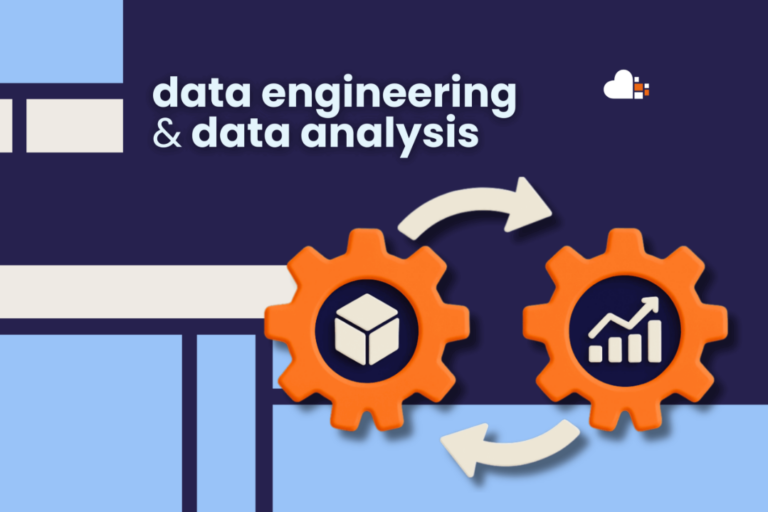
Data engineering and data analytics are not competing disciplines—they are complementary.
Without data engineering:
- Data would be messy and unreliable
- Analysts would spend most of their time cleaning data
Without data analytics:
- Data would have no business value
- Organizations would not gain insights
Together, they form a complete data ecosystem that transforms raw data into actionable knowledge.
Real-World Example
Consider an e-commerce company:
Role of Data Engineers:
- Collect data from website activity
- Build pipelines to process transactions
- Store data in a warehouse
Role of Data Analysts:
- Analyze customer behavior
- Identify popular products
- Create sales reports
- Recommend marketing strategies
Both roles are essential for the company’s success.
When Does a Business Need Data Engineering vs Data Analytics?
You Need Data Engineering If:
- You have large volumes of raw data
- Data is coming from multiple sources
- You need scalable infrastructure
- Data processing is slow or unreliable
You Need Data Analytics If:
- You want insights from your data
- You need reports and dashboards
- You want to improve decision-making
- You are tracking performance metrics
Most businesses need both functions to operate effectively.
Career Comparison: Data Engineer vs Data Analyst
Data Engineer Career Path:
- Entry-level: Junior Data Engineer
- Mid-level: Data Engineer
- Senior-level: Senior Data Engineer / Data Architect
Data Analyst Career Path:
- Entry-level: Junior Data Analyst
- Mid-level: Data Analyst
- Senior-level: Senior Analyst / Business Intelligence Analyst
Salary Comparison
In general:
- Data engineers tend to earn higher salaries due to their technical expertise
- Data analysts earn competitive salaries depending on experience and industry
Advantages of Data Engineering
- Enables scalable data systems
- Improves data reliability
- Supports real-time processing
- Powers AI and machine learning
Advantages of Data Analytics
- Provides actionable insights
- Improves business decision-making
- Identifies trends and opportunities
- Enhances performance tracking
Challenges in Data Engineering
- Managing large-scale systems
- Ensuring data security
- Handling complex integrations
- Keeping up with evolving technologies
Challenges in Data Analytics
- Dealing with incomplete data
- Ensuring accuracy of insights
- Communicating findings effectively
- Avoiding bias in analysis
Future Trends: Data Engineering vs Data Analytics
Both fields are evolving rapidly.
Data Engineering Trends:
- Automation of pipelines
- Cloud-native architectures
- Real-time data processing
- Data observability
Data Analytics Trends:
- Self-service analytics
- AI-powered insights
- Advanced visualization tools
- Augmented analytics
The line between these roles is also becoming more blurred as tools become more integrated.
Which One Should You Choose?
If you’re considering a career in data, your choice depends on your interests:
Choose Data Engineering If:
- You enjoy coding and system design
- You like working with infrastructure
- You prefer backend development
Choose Data Analytics If:
- You enjoy interpreting data
- You like storytelling with data
- You prefer business-focused work
Both careers offer strong growth opportunities and are in high demand.
Conclusion
Data engineering and data analytics are two critical pillars of the modern data ecosystem. While data engineering focuses on building the infrastructure that makes data usable, data analytics focuses on extracting insights that drive business decisions.
Understanding the differences between these roles helps organizations build better data strategies and enables professionals to choose the right career path.
In a world where data is becoming increasingly important, both data engineers and data analysts play indispensable roles. Together, they transform raw data into meaningful insights that power innovation, efficiency, and growth.
Whether you are a business leader or an aspiring data professional, recognizing the value of both disciplines is key to success in the data-driven era.