In the rapidly evolving digital landscape, big data continues to be a driving force behind innovation, decision-making, and competitive advantage. As we move into 2026 and beyond, organizations across industries are leveraging advanced data technologies to extract deeper insights, automate processes, and create more personalized user experiences.
This article explores the most important big data trends shaping the future, helping businesses, professionals, and tech enthusiasts stay ahead of the curve.
1. The Rise of AI-Driven Data Analytics
Artificial Intelligence (AI) is no longer just a complementary tool in data analytics—it has become the core engine. In 2026, AI-powered analytics platforms are enabling organizations to process vast datasets faster and more accurately than ever before.
Machine learning algorithms can now:
- Detect patterns in real time
- Predict future outcomes
- Automate complex decision-making processes
Businesses are shifting from descriptive analytics (what happened) to predictive and prescriptive analytics (what will happen and what to do about it). This transition significantly enhances strategic planning and operational efficiency.
2. Real-Time Data Processing Becomes Standard
In the past, batch processing dominated big data workflows. However, in today’s fast-paced environment, real-time data processing is becoming essential.
Companies now demand immediate insights for:
- Fraud detection
- Customer behavior tracking
- Supply chain optimization
Streaming technologies allow organizations to analyze data the moment it is generated. This shift reduces latency and enables faster, data-driven decisions that can impact revenue and customer satisfaction.
3. Data Fabric and Data Mesh Architectures
Traditional centralized data systems are being replaced by more flexible architectures like data fabric and data mesh.
Data Fabric
Data fabric integrates data across different environments, providing a unified view without moving the data physically. It simplifies data management and improves accessibility.
Data Mesh
Data mesh decentralizes data ownership, allowing teams to manage their own data as products. This approach:
- Enhances scalability
- Reduces bottlenecks
- Improves data quality
These architectures are becoming crucial for organizations dealing with massive, distributed datasets.
4. Edge Computing and Big Data Integration
With the growth of IoT devices, edge computing is playing a major role in big data strategies.
Instead of sending all data to centralized cloud servers, edge computing processes data closer to its source. This results in:
- Reduced latency
- Lower bandwidth usage
- Faster insights
Industries like healthcare, manufacturing, and smart cities are heavily adopting edge analytics to enable real-time decision-making at the device level.
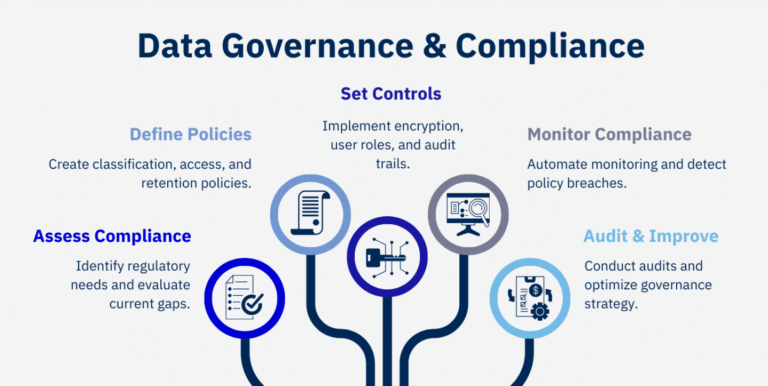
5. Data Privacy and Governance Take Center Stage
As data collection increases, so do concerns about privacy and security. Governments worldwide are implementing stricter data regulations, forcing organizations to prioritize compliance.
Key focus areas include:
- Data encryption
- Access control
- Ethical data usage
- Transparent data policies
Companies that fail to implement strong data governance frameworks risk legal penalties and loss of customer trust.
6. The Explosion of Unstructured Data
A significant portion of global data is unstructured—think social media posts, videos, images, and emails. Managing and analyzing this data is becoming a major focus in 2026.
Advanced tools using natural language processing (NLP) and computer vision are enabling organizations to:
- Extract meaning from text and images
- Analyze customer sentiment
- Identify trends in multimedia content
This trend opens new opportunities for businesses to gain insights that were previously inaccessible.
7. Cloud-Native Big Data Solutions
Cloud computing continues to dominate the big data ecosystem. In 2026, cloud-native solutions are becoming the default choice for data storage and analytics.
Benefits include:
- Scalability on demand
- Cost efficiency
- Global accessibility
Organizations are increasingly adopting multi-cloud and hybrid cloud strategies to avoid vendor lock-in and improve resilience.
8. Data Democratization Across Organizations
Data is no longer limited to data scientists and IT departments. Data democratization is empowering employees at all levels to access and use data.
Modern tools feature:
- User-friendly dashboards
- Self-service analytics
- Low-code or no-code interfaces
This trend enhances collaboration and enables faster decision-making across departments, from marketing to finance.
9. Automation in Data Engineering
Data engineering processes are becoming more automated, reducing the need for manual intervention.
Automation tools can:
- Clean and prepare data
- Detect anomalies
- Optimize data pipelines
This not only improves efficiency but also reduces human error, allowing data teams to focus on higher-value tasks like strategy and innovation.
10. The Growth of Synthetic Data
Synthetic data—artificially generated data that mimics real datasets—is gaining popularity.
It is especially useful for:
- Training AI models
- Testing systems
- Preserving privacy
Since synthetic data does not contain real personal information, it helps organizations comply with privacy regulations while still benefiting from large datasets.
11. Augmented Analytics Enhances Decision-Making
Augmented analytics uses AI and machine learning to automate data preparation, insight generation, and explanation.
This allows users to:
- Ask questions in natural language
- Receive automated insights
- Visualize complex data easily
As a result, decision-making becomes faster, more accurate, and accessible to non-technical users.
12. Data Observability and Quality Management
As data systems grow more complex, ensuring data quality becomes critical.
Data observability tools monitor:
- Data accuracy
- Data consistency
- Pipeline performance
Organizations are investing heavily in these tools to ensure reliable insights and maintain trust in their data systems.
13. Industry-Specific Big Data Applications
Different industries are leveraging big data in unique ways:
Healthcare
- Predictive diagnostics
- Personalized treatment plans
Finance
- Fraud detection
- Risk assessment
Retail
- Customer personalization
- Inventory optimization
Manufacturing
- Predictive maintenance
- Process automation
These tailored applications demonstrate how big data is transforming entire sectors.
14. Quantum Computing and Big Data (Emerging Trend)
Although still in its early stages, quantum computing has the potential to revolutionize big data processing.
Quantum systems can:
- Solve complex problems faster
- Analyze massive datasets efficiently
While widespread adoption may still be years away, businesses are beginning to explore its potential impact.
15. Sustainability and Green Data Initiatives
With growing environmental concerns, organizations are focusing on making their data operations more sustainable.
Efforts include:
- Energy-efficient data centers
- Optimized data storage
- Reduced computational waste
Green data strategies not only help the environment but also reduce operational costs.
16. Data-as-a-Service (DaaS) Expansion
Data is increasingly being treated as a product. Data-as-a-Service (DaaS) allows organizations to provide data on demand to customers and partners.
Benefits include:
- New revenue streams
- Improved data accessibility
- Faster integration across systems
This trend is reshaping how businesses monetize and share data.
17. Enhanced Cybersecurity with Big Data
Cybersecurity is becoming more sophisticated with the help of big data analytics.
Organizations use data to:
- Detect threats in real time
- Analyze attack patterns
- Strengthen security systems
Big data enables proactive defense mechanisms rather than reactive responses.
18. The Role of 5G in Big Data Growth
The rollout of 5G networks is accelerating the growth of big data.
With faster speeds and lower latency, 5G enables:
- Real-time data streaming
- Advanced IoT applications
- Improved mobile analytics
This infrastructure is critical for supporting the next generation of data-driven technologies.
19. Digital Twins and Data Simulation
Digital twins—virtual replicas of physical systems—are becoming increasingly popular.
They use real-time data to:
- Simulate scenarios
- Predict outcomes
- Optimize performance
Industries like manufacturing and urban planning are leveraging digital twins for better decision-making.
20. Ethical AI and Responsible Data Usage
As data and AI become more powerful, ethical considerations are gaining importance.
Organizations must ensure:
- Fair and unbiased algorithms
- Transparent data usage
- Accountability in AI decisions
Ethical data practices are essential for maintaining trust and long-term success.
Conclusion
Big data is no longer just a technological trend—it is the backbone of modern innovation. As we enter 2026 and beyond, the integration of AI, real-time analytics, edge computing, and advanced data architectures will redefine how organizations operate.
Businesses that embrace these trends will gain a competitive edge, while those that fail to adapt risk falling behind. By staying informed and investing in the right technologies, organizations can unlock the full potential of big data and drive sustainable growth in the digital era.
Final Thoughts
The future of big data is dynamic, complex, and full of opportunities. Whether you are a business leader, data professional, or tech enthusiast, understanding these trends will help you navigate the evolving landscape with confidence.
Now is the time to prepare, innovate, and harness the power of data to shape a smarter, more connected world.